
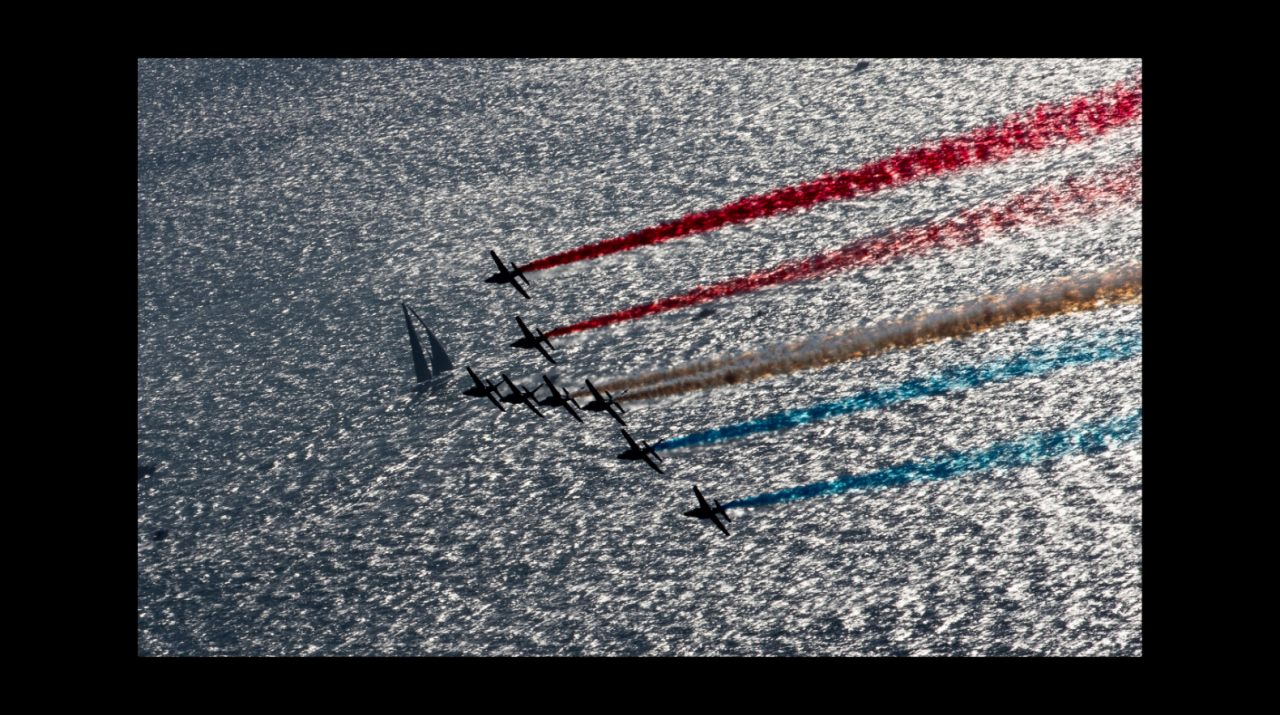
Offshore Sailing: Our Starting Point
Our activity was first built within the highly demanding environment of offshore racing.
This context imposes strict constraints in terms of electronic architecture, onboard data management, system reliability, crew safety, and structural monitoring.
On these platforms, systems must operate continuously, handle a large number of sensors, ensure consistency across all onboard equipment, and maintain a high level of operational safety.
It is within this framework that we developed our expertise:
Design of complete electronic architectures, integration of complex embedded systems, fiber optic instrumentation for structural monitoring, onboard data management and exploitation platforms.
Offshore sailing therefore forms the technical foundation upon which our development has been built.
Diversification Toward Strategic Markets
The challenges encountered in offshore racing (reliability of critical systems, real-time monitoring, and control of data flows) are equally present in other high-demand technical sectors.
Building on this technical foundation, we have progressively expanded our scope of activity. This evolution is not solely the result of an internal strategic approach; it has also been driven by external requests from stakeholders facing similar challenges in maritime transport, defense, and aeronautics.
During the SHEM visit, we presented the full extent of our expertise, as well as our ability to adapt our architectures and development methodologies to the specific constraints of these different markets.
This is not simply a transfer of solutions developed for sailing, but rather the adaptation of our architectures and methods to environments subject to comparable operational and technological constraints.
A Shared Interest in Technological Mastery
Thierry Duchesne, Director of the Maritime Department at FMES, highlighted the relevance of the visit within the SHEM module:
“What interested us greatly was seeing how technologies developed in offshore racing can have potential applications in other domains.”
He also emphasized the alignment between our activities and the themes addressed during the session:
“Pixel sur Mer operates in a high-technology field. There is a maritime security dimension that greatly interests us, but also the issue of technological sovereignty. Any development by France of high-performance technologies contributes to mastering the future.”
These discussions confirm the relevance of our positioning: the technologies we develop in a demanding environment naturally find their place in strategic sectors such as maritime transport, aeronautics, and defense.
Offshore racing remains a highly demanding technical field, but today it serves as the foundation from which we deploy this expertise toward other markets facing comparable constraints.